Ferrari Hydrophobic Coating in Manchester
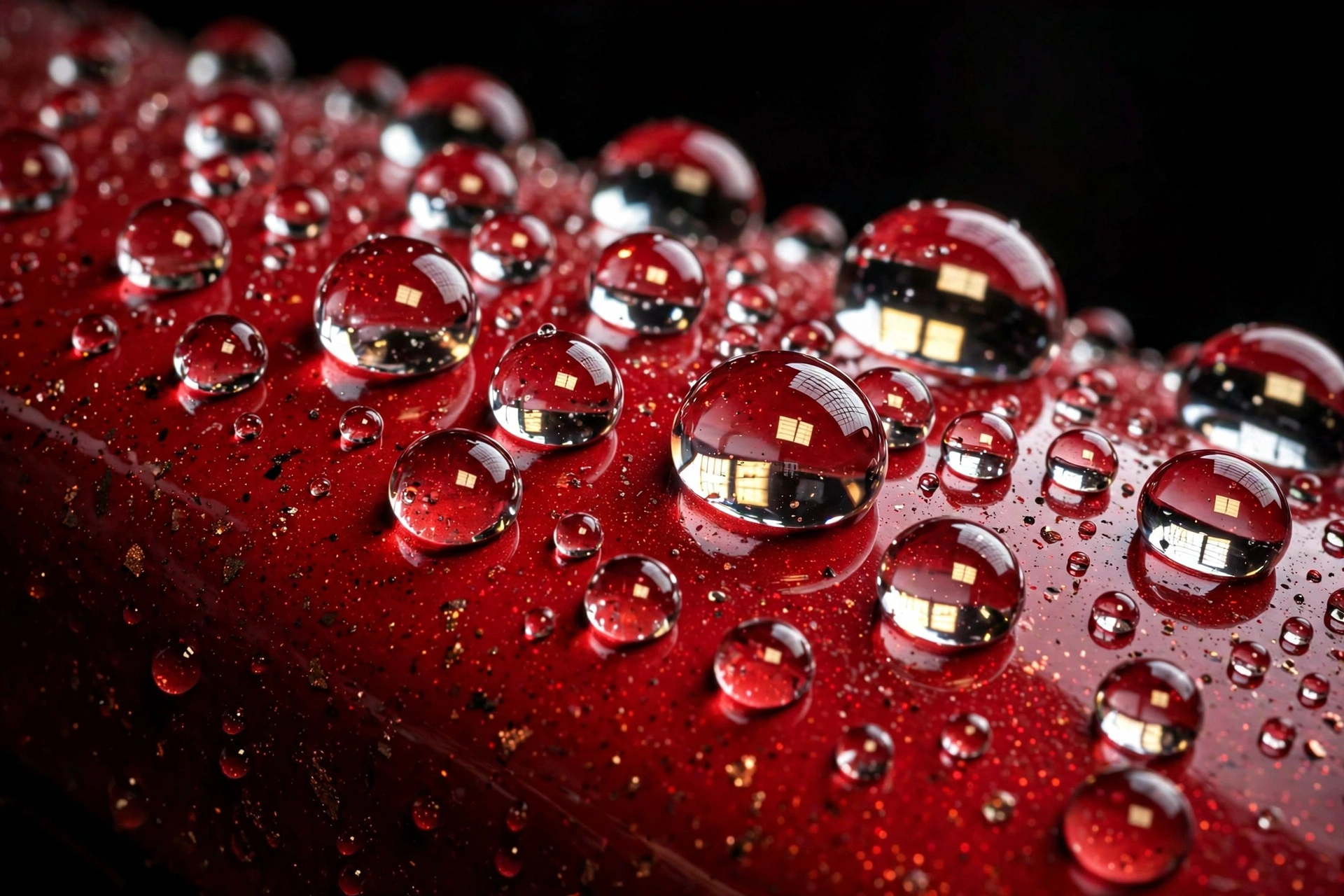
A water repellent — hydrophobic — surface forces water to bead and roll off rather than spreading into a sheet. On a Ferrari, that behaviour comes from SiO2 ceramic coatings cured onto the paint, so rain, rinse water and road grime release easily. It is not the same as waterproof: the surface sheds water but is not sealed against it.
Key facts
- Water repellent meaning
- A hydrophobic surface forces water to bead and roll off rather than spreading — the visible signature of a quality SiO2 coating.
- DWR meaning
- Durable water repellent: spray sealants that add temporary beading for weeks — useful top-ups, not coating substitutes.
- Repellent vs waterproof
- Hydrophobics manage water — beading and sheeting — but cannot seal paint against pressurised or long-dwelling water.
- Sprays vs coatings
- Hydrophobic sprays last weeks to months; professionally applied SiO2 ceramic coatings last years.
So what is the water repellent meaning when detailers talk about your Ferrari? Simply this: a surface treatment that makes water behave — beading into tight droplets and rolling away instead of clinging as a flat film. That behaviour, called hydrophobicity, is the visible signature of a quality SiO2 ceramic coating. It is why rain seems to flee a freshly coated bonnet, and why coated cars stay cleaner between washes: water carries loose contamination away with it.
Not all hydrophobics are equal, and honesty matters here. A hydrophobic coating spray from a detailing shelf gives weeks to a few months of beading — pleasant, but fleeting. A professionally applied SiO2 ceramic coating delivers years of it, because the water-repelling structure is cured into the paint rather than sitting on top. As for 'superhydrophobic car coating' — that is marketing language for extreme beading angles, not a different science. Below, we explain what hydrophobics can and cannot do for your Ferrari.
Water Repellent Meaning: What Hydrophobic Really Means
In plain terms, water repellent describes a surface that water cannot easily wet. On an untreated panel, water spreads into a thin sheet and clings; on a hydrophobic surface it pulls into beads with a high contact angle and rolls off at the slightest encouragement. Detailers measure this with contact-angle readings, but your eyes do the same job: tight, tall beads that race off the bonnet mean strong hydrophobics; flat, lazy water means they are fading.
You will also see the term DWR — and dwr meaning is worth knowing. Durable water repellent began life in outdoor clothing, describing treatments that make fabrics shed rain. Detailing borrowed the phrase for spray sealants that add temporary beading: a durable water repellent dwr coating in car care is really a short-term top-up, lasting weeks rather than years. It is a useful maintenance product, but it is not a substitute for a cured ceramic coating.
How Your Ferrari Gets Its Hydrophobic Behaviour
The lasting kind comes from SiO2 ceramic coatings. Applied to properly corrected paint, the liquid coating cures into a hardened layer chemically bonded to the clear coat — and its microscopic structure is what repels water for years rather than weeks. This is the hydrophobic car coating worth paying for: the beading is a property of the cured layer itself, so it survives hundreds of washes when maintained with pH-neutral products and sensible technique.
The fleeting kind comes from hydrophobic sprays and spray sealants — quick to apply, satisfying to watch, gone within months. They have a legitimate role as maintenance top-ups on an already-coated Ferrari, refreshing beading between details. What they cannot do is replace the coating: sprayed hydrophobics sit on the surface and wash away, while a cured coating is part of it. Judge any 'coating water repellent' claim by one question — is it cured, or is it sprayed?
Is Water Repellent Waterproof? The Honest Answer
No — and the distinction matters. Water repellent means water beads and runs off under its own weight; waterproof means water cannot pass through at all, even under pressure. A hydrophobic coating sheds rain beautifully, but pressure-washer water forced into a shut line, or water sitting long enough to dry into spots, still reaches the paint. Think of it as water management, not a force field.
The same honesty applies to glass. An automotive rain repellent or windscreen rain repellent makes motorway rain bead and blow clear — genuinely useful on a Ferrari at speed — but wipers abrade it within weeks, and it does nothing for the paintwork. Treat glass coatings as a consumable comfort upgrade, and keep your expectations, and your wiper blades, in good order.
Keeping the Beading Alive on Your Ferrari
Hydrophobics fade — that is normal, not failure. Harsh alkaline cleaners, automatic car washes and neglected contamination all flatten beading prematurely. Wash with pH-neutral shampoo, use the two-bucket method, and dry with plush towels or filtered air rather than letting water evaporate on the panels. When beading softens, a silica-based top-up spray restores the show without disturbing the coating beneath.
One caution: beading is not protection against water spots. Mineral deposits left as droplets dry can etch into the coating — and on dark Ferrari paint, those etchings show. Never leave a wet Ferrari baking in sun; dry it promptly after washing or rain. Maintained this way, a quality coating keeps its water behaviour strong for years, and your paintwork stays easier to clean throughout.
How a hydrophobic coating is applied to a Ferrari
Lasting hydrophobics are earned in the preparation. Here is the sequence behind every coating we apply.
- 1
Decontamination
A meticulous wash, iron fallout treatment and clay bar work strip bonded contamination from the paint. Hydrophobic coatings bond to clean clear coat — anything left on the surface weakens that bond and shortens the coating's life.
- 2
Machine polishing
The paint is machine polished to remove swirls and haze, because a coating locks in whatever finish lies beneath it. On Ferrari's thin, soft clear coat this is measured, test-spotted work — never rushed.
- 3
Panel wipe
Every panel is wiped with a dedicated panel-wipe solution to remove polishing oils and residues. This leaves the clear coat surgically clean, giving the SiO2 coating the pristine surface it needs for a full chemical bond.
- 4
Application and curing
The coating is applied panel by panel, levelled to an even film and left to cure under controlled conditions. Once cured, the hydrophobic structure is part of the paint — beading from the first wash, and protected by the aftercare guidance we hand over.
Related Ferrari protection guides
Serving Manchester & Greater Manchester
Manchester weather is the ultimate test of hydrophobics — and the reason Ferrari owners here notice the difference most. From Pennine rain sweeping across the M60 to winter road spray on the M56, a coated Ferrari simply sheds what an uncoated car wears. Owners from Didsbury to Hale, Wilmslow to Alderley Edge and the city centre around Spinningfields all face the same cycle of rain, grit and Trafford's winter salting. Proper water behaviour means less contamination bonding between washes — request a free quote and we will assess your paintwork's current hydrophobic performance.
Areas we serve
ManchesterSalfordStockportAltrinchamTraffordBuryOldhamWigan
Ferrari ceramic coating across Manchester & Greater Manchester — Manchester service area →
Frequently asked questions
What does water repellent mean?
What does DWR mean?
Is water repellent waterproof?
How long does a hydrophobic coating last on a car?
What is the difference between a hydrophobic spray and a ceramic coating?
Will a hydrophobic coating stop water spots on my Ferrari?
Get your free, no-obligation quote
Tell us which Ferrari you drive and what it needs. We'll reply with an exact price and the earliest available slot.