Guide · 14 October 2026 · Ferrari Ceramic Coating Manchester
What Does Ceramic Coating Do?
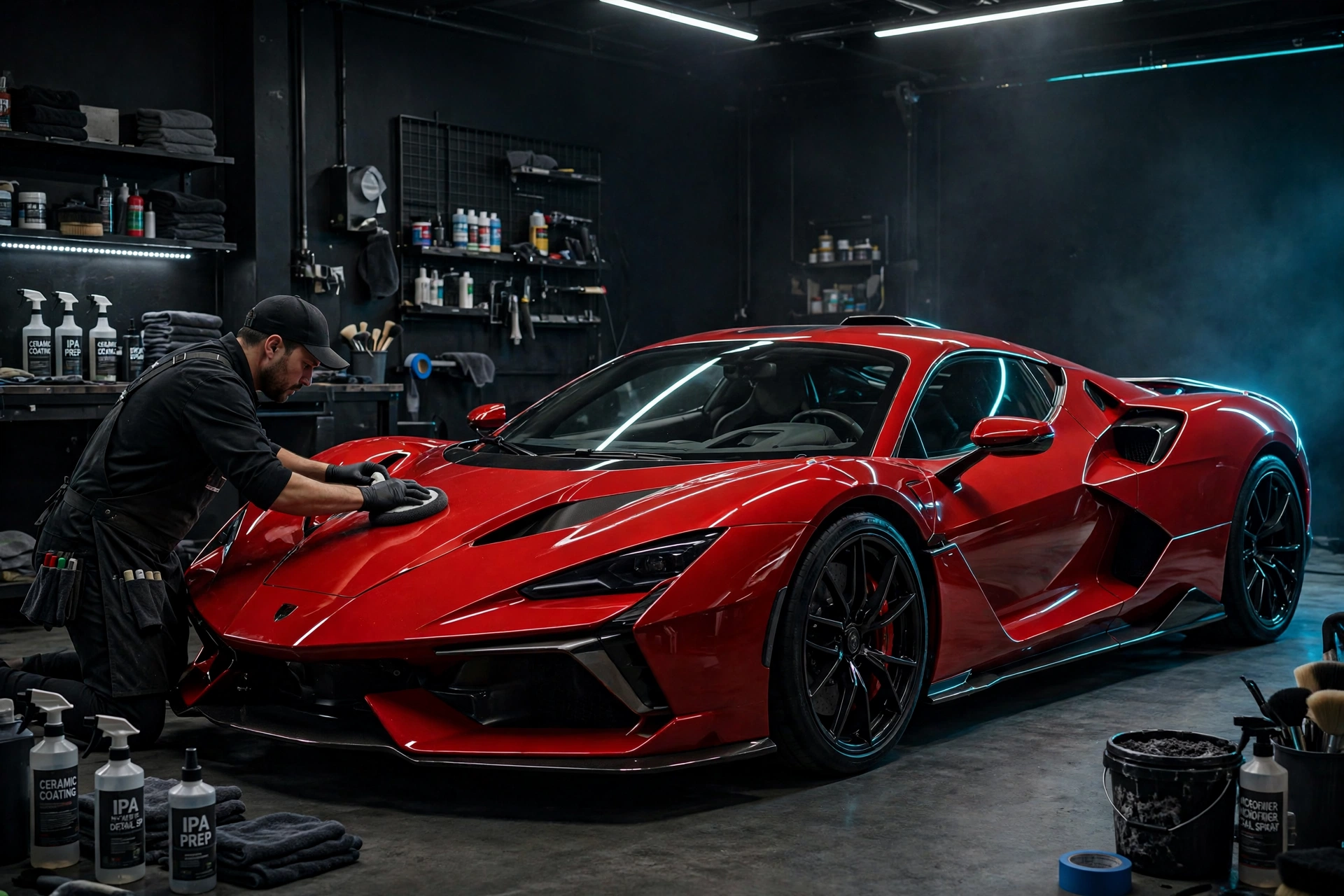
Ceramic coating is a silica-based (SiO2) liquid that chemically bonds to your Ferrari's clear coat, forming a hardened hydrophobic shell. It makes water bead and sheet off, deepens gloss, resists UV fade and chemical staining, and makes washing far easier. It does not stop stone chips, fix existing swirls, or remove the need to wash the car.
Search “what does ceramic coating do” and you will find equal parts marketing hype and forum cynicism. The truth sits in the middle. A ceramic coating is a liquid polymer — most commonly silicon dioxide, or SiO2, sometimes blended with titanium dioxide — that is applied to properly prepared paintwork and cures into a thin, glass-like layer chemically bonded to the clear coat. That bond is the whole point: unlike wax, which sits on top and washes away, a coating becomes part of the surface.
Once cured, that layer changes how the paint behaves: water sheets off instead of clinging, dirt struggles to bond, UV and chemicals meet a sacrificial barrier before they reach your Ferrari's clear coat, and the finish takes on a deep, liquid gloss. This guide explains each effect in plain English, lists what coatings honestly cannot do, and points you to our Ferrari ceramic coating page, which covers the full process from correction to cure.
What ceramic coating is made of — and why the bond matters
Most consumer and professional ceramic coatings are built on silicon dioxide (SiO2), the same chemistry as glass and quartz. When applied to decontaminated, machine-polished paint, the liquid cross-links as it cures and forms a covalent bond with the clear coat — it does not just sit on top like wax or sealant. That chemical bond is why coatings last years instead of weeks, and why they resist detergents and environmental fallout that would strip a wax in a single wash.
What ceramic coating does: the five effects
Once cured, a coating delivers five practical effects. First, hydrophobics: water beads tightly and sheets off, carrying loose dirt with it. Second, gloss: the glass-like layer adds measurable depth and clarity, especially over corrected paint. Third, UV resistance, which slows fading and oxidation. Fourth, chemical resistance against bird lime, tree sap, iron fallout and road salt. Fifth, easier maintenance — contamination bonds to the coating, not your clear coat, so washing is quicker and safer.
- Hydrophobics — water beads and sheets off paint, glass and wheels
- Gloss — added depth and clarity, strongest over machine-polished paint
- UV resistance — slows fading and oxidation of paint and trim
- Chemical resistance — bird lime, sap, fallout and salt meet the coating first
- Easier washing — dirt releases quickly, cutting wash time and swirl risk
What ceramic coating does NOT do — the honest limits
Here is what no honest detailer will promise. Ceramic coatings do not stop stone chips or scratches — they are microns thick with negligible impact resistance. They do not fix swirls, haze or water spots already in the paint; they seal them in. They do not make a car self-cleaning or maintenance-free; a coated Ferrari left dirty for months will still degrade. And they do not replace paint protection film where physical defence is needed. Understanding these limits is what separates a good purchase from a disappointing one.
How ceramic coating is applied to a Ferrari
The process matters as much as the product. A proper Ferrari coating job starts with a full decontamination wash, iron and tar removal, then machine polishing to correct swirls and haze — usually the longest stage. Only then is the coating applied panel by panel in a controlled environment and left to cure. Our Ferrari ceramic coating page covers the full process step by step, so you know exactly what a professional job should include before you request a free quote.
Trusted further reading
- Autoglym — What is ceramic coating? — Manufacturer explainer
Keep reading
Serving Manchester & Greater Manchester
Manchester throws everything at Ferrari paintwork: M60 motorway film, winter gritting salt, city-centre bird lime and Pennine rain that spots paint dried in the sun. A ceramic coating is engineered for exactly these attacks — contaminants meet the coating first, not your clear coat. We coat Ferraris across Greater Manchester, always with full paint correction first. Request a free quote and we will explain honestly what a coating will do for your car — and what it will not.
Areas we serve
ManchesterSalfordStockportAltrinchamTraffordBuryOldhamWigan
Ferrari ceramic coating across Manchester & Greater Manchester — Manchester service area →
Frequently asked questions
How is ceramic coating different from wax?
Does ceramic coating change the colour of my Ferrari?
Can ceramic coating be removed?
Do I need to reapply ceramic coating every year?
Get your free, no-obligation quote
Tell us which Ferrari you drive and what it needs. We'll reply with an exact price and the earliest available slot.